
01 · Existing platform
Keep the workflow residents know
Primestar works around the municipality's current meeting platform and focuses on the production responsibilities that happen before, during, and after the meeting.
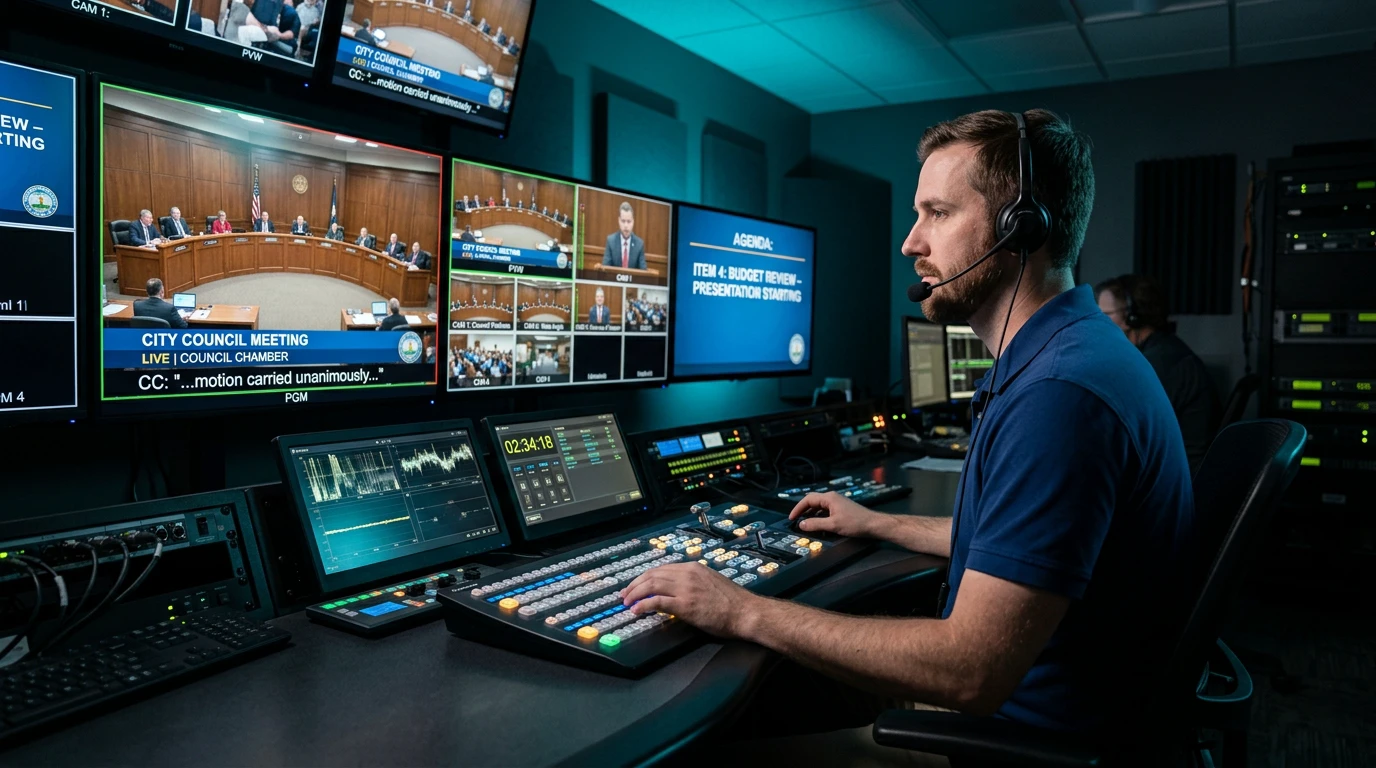
Already using Granicus, Swagit, or another municipal meeting platform? You do not have to replace the workflow your staff and residents already know. Primestar provides the cameras, audio, presentations, graphics, monitoring, and meeting-night production around your existing municipal technology.
Retain the agenda, meeting, and public-access workflow already in place.
Give the room, cameras, audio, and live program a defined operating team.
Use the production model that fits the chamber, equipment, and staffing plan.
A municipality can keep the software, portal, archive, and records process it already uses while assigning the live production work to a broadcast team. That distinction is the starting point for a practical conversation.
A municipal meeting platform can organize the agenda and public record. The room still needs someone to manage cameras, audio, presentations, switching, monitoring, and the handoff to the live destination.
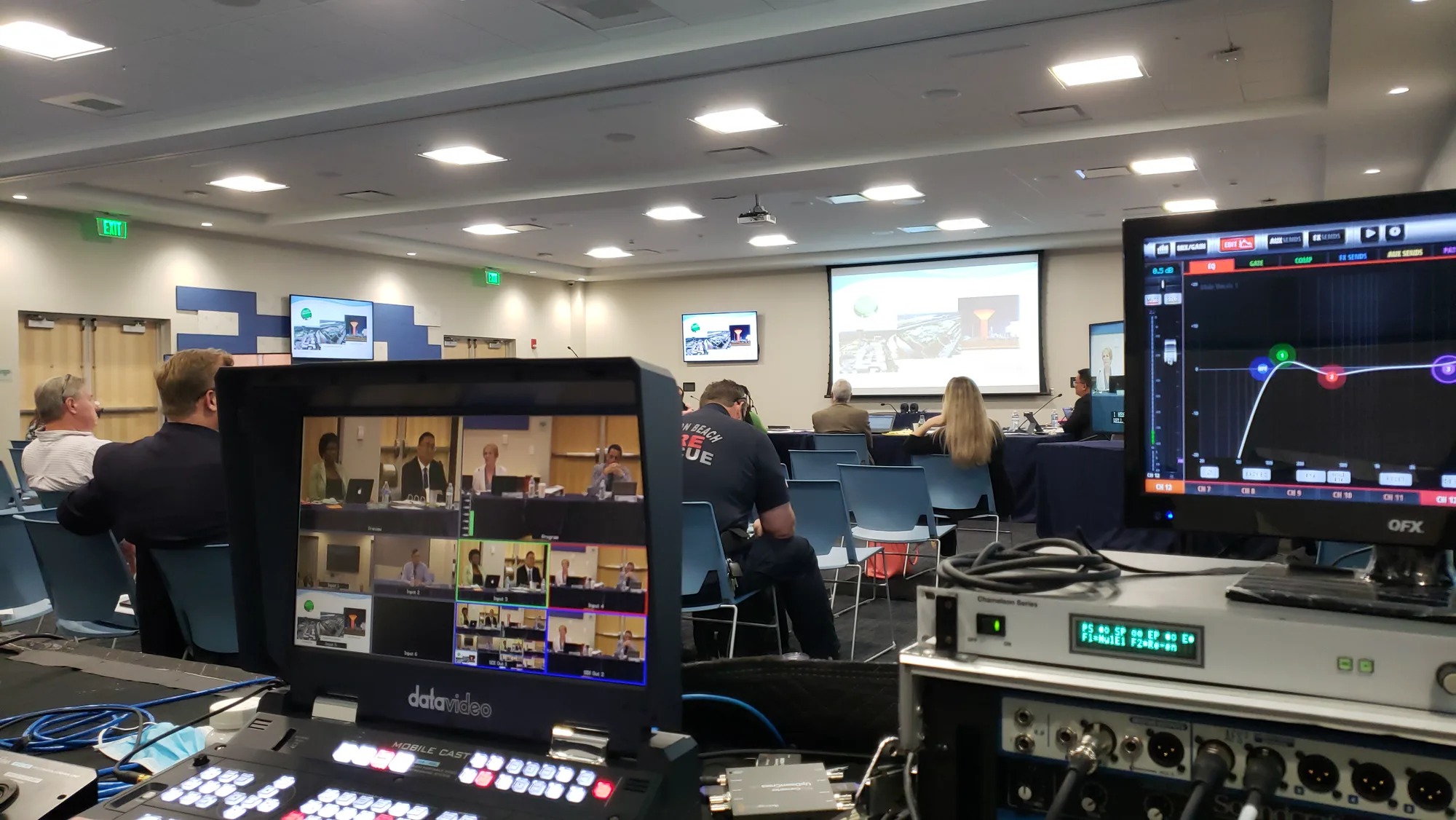
Some municipalities need operators. Some need a remote control room. Some need a complete chamber and broadcast system. Primestar can begin with the production responsibility you actually need to solve.
Primestar works around the municipality's current meeting platform and focuses on the production responsibilities that happen before, during, and after the meeting.
If the municipality has already invested in cameras, audio, displays, and connectivity, Primestar can assess the room and plan the operator and support scope around it.
Connect the chamber to the Primestar studio for remote camera direction, audio, presentations, graphics, monitoring, and distribution.
When a camera, microphone, presentation, network path, encoder, captioning workflow, or destination needs attention, the municipality should know who owns the production conversation.
Dais, lectern, public comment, presentation, wide, and remote-participant views.
Meeting sources, speaker identifiers, agenda context, and readable on-air composition.
Council microphones, public comment, program mix, recording, and live signal checks.
A production contact for the chamber, the platform workflow, and the service vendors involved.
A platform-compatible production conversation starts with the room, the current workflow, and the responsibilities your staff no longer want to own on meeting night.
Primestar can assess how the live production layer fits around an existing Granicus workflow, including cameras, audio, presentations, graphics, streaming, recording, and the handoff to the municipal meeting system. The exact technical path and division of responsibilities are confirmed during planning.
A municipality using Swagit can begin the conversation with the production responsibilities it wants to keep, improve, or move to an operating partner. We review the current room, platform workflow, service responsibilities, and distribution path before defining the production scope.
Primestar is primarily the production layer: the people, equipment, operation, and technical coordination behind the live meeting broadcast. It is not presented as a replacement for agenda management, meeting records, civic engagement, or platform features Primestar does not provide.
If the existing cameras, audio, control equipment, network path, and room workflow are suitable, Primestar can plan around them. An assessment identifies what can be operated as-is, what needs to be reconfigured, and where a system change is necessary for a dependable production.
Yes. Primestar supports onsite production, remote production from the Primestar studio, and blended models. The right model depends on the room, installed equipment, network, meeting format, and the responsibilities the municipality wants the production partner to own.
Tell us what your municipality uses today, what happens in the chamber, and which production responsibilities are creating the most friction. We will start with the layer that needs solving.